Tuesday, January 06, 2009

Stacey's Bookstore... in memoriam


Stacey's Bookstore, a fixture in San Francisco for 85 years, announced to the staff today that the store will be closing for good in March of this year.
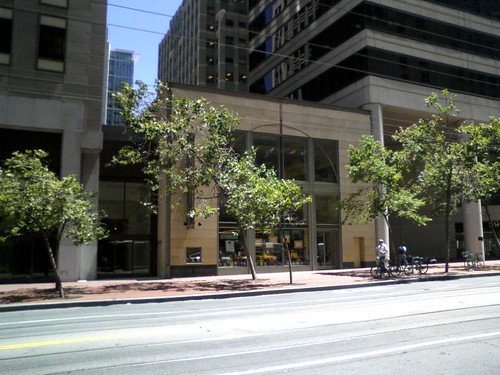
To any and all who worked there, or in any of the branch stores already gone, and to the thousands who shopped there over the decades, the loss will be immeasurable.  Stacey's was everything an independent bookstore was meant to be; welcoming, diverse, eclectic, and fiercely, defiantly a bookstore first, last and always.  It was not a toyshop, a coffee bar, or a corporate merchandising environment.  It was not a publicly traded business model, or an Internet investment opportunity.  It was not a retailer of products, some of which happened to be books.  It was not a bland, homogenized mall operation, selling a narrow selection of safe bestsellers, in a cozily overstuffed cultural void, with every available corner crammed with cheap reprints, sidelines and logo bespattered promotions. It was not, in short, the kind of bookstore the city of San Francisco, at the behest of developers, and with the tacit support of City Hall, invited into its new cultural centers and onto every other corner of Market Street. 
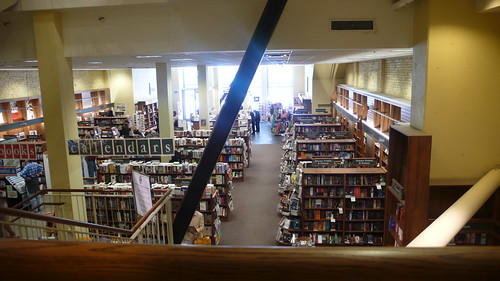
What Stacey's was was an Independent Bookstore; stocked, staffed and operated by Independent Booksellers whose knowledge, commitment and heart created one of the finest bookstores on the West Coast.  

Mr. John W. Stacey started the company in 1923.  The full history of Stacey's in San Francisco is one of constant reinvention, expansion and service.   And always, from the beginning, it was about providing books to readers.

There is no way for me to express my personal sense of loss on hearing the news that Stacey's is closing.  It was my home for twelve years.  I learned how to sell books there.  I learned what it meant to be a valued and respected member of a bookselling family there.  I made many friends there, among customers and staff.  Stacey's, for me, will always be my standard of what a bookstore can and ought to be.

I can not believe it will be gone by March.

Monday, January 05, 2009

The Most Important Debate

The Lincoln/Douglas debates are justifiably famous, much written about still, and a source of endless interest to scholars and readers alike.  But the Douglas who now towers over our memory of the Civil War, is not "the Little Giant" who fought Lincoln for the Illinois Senate seat.  There is perhaps no more important American thinker and writer of the period, from the modern perspective, save possibly Lincoln himself, then Frederick Douglas.  A former slave, author of a remarkable autobiography that to my knowledge has never since been out of print, an abolitionist, newspaperman, a philosopher, and a champion of his people, and of civilization, Frederick Douglas is among the most inexhaustible subjects for study in our history.

His name is inevitably linked to that of Lincoln.  Now there are two books -- one new and the other from just a year ago -- that make that connection explicit.  John Stauffer's Giants: The Parallel Lives of Frederick Douglas and Abraham Lincoln is the latest, and has, rightly, received a great deal of press.  It is an excellent book; well researched and well told by this young Harvard professor.  Stauffer's equitable division of attention, even as the l
ives of his subjects both grow increasingly complex and eventually intersect, is handled masterfully throughout, never stinting either man. 

The slightly older title, Douglas and Lincoln: How a Revolutionary Black Leader and a Reluctant Liberator Struggled to End Slavery and Save the Union, by Paul and Stephen Kendrick, who are father and son, is more concerned with Douglas and specifically his campaign to free his people, with or without the assistance of the President of the United States.  The perspective is that of Frederick Douglas here and, without the constraints of writing a dual biography, the Kendricks can and do concentrate on Douglas and his amazing achievements, not least of which was hectoring, denouncing, eventually meeting with, and even coming to respect Abraham Lincoln.   The scene of their first actual meeting is electrifying in both tellings, and is, for me, one of the most dramatic moments in our history, though the meeting itself was nothing if not civil on both sides.  Still, at that moment, the United States, was changed.

Having two such richly detailed books about two such remarkable figures is a bonanza for students of American history.  That both are accessible, well researched and well written is a delight and a surprise for readers in this Lincoln Bicentennial Year.

Sunday, January 04, 2009

Tried By Fire

James M. McPherson is of the school of my favorite historians, the great popularizers; writers of sound and exciting prose narratives whose subject is history, whose audience is non-academics, and whose mission is to keep alive our history for the common reader.  Using the most comprehensive research, but not encumbered by endless footnotes detailing and rehashing the debates of point inevitable when historians disagree, McPherson's books are models of the kind of history that so seldom gets written nowadays, but always gets read. 

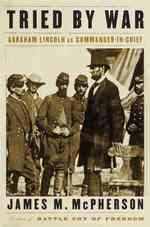
His new book, Tried by War: Abraham Lincoln as Commander in Chief, takes a more narrow focus than most of the new Lincoln biographies, and concentrates on how Lincoln ran the war; fighting his generals, shaping public opinion in the North, using, and possibly even abusing his powers as Commander in Chief, all with the single goal of preserving the Union.  Presumably taking Lincoln's dogged concentration as his example, McPherson refuses the thousand distractions -- philosophical, anecdotal, biographical -- to which any writing about Lincoln and the Civil War are prone, and keeps to a linear telling of one man's efforts to do an almost impossible thing and how he triumphantly did it; at the cost of thousands of lives, millions of dollars, and ultimately at the cost of his own life.  It is the most remarkable individual story in our history, and this is an aspect of that story too little understood and never told in quite this way before.

McPherson's book is one of the best of the new Lincolns, and I can not imagine a better writer to tell it.   I am not a reader of military history.  I have too little sympathy with the men who make war and not the right kind of brain to follow troop movements and tactics and the like.  But by placing Lincoln at the center of his book, and by telling the story of the war as it passed through Lincoln's hands, McPherson has managed the very difficult task of making this a thrilling, frustrating and even a very moving story of an individual man, a great man, without diminishing in any way the enormity of what happened or the sacrifices and tragedies of the millions who fought and suffered at his behest.  Lincoln emerges from McPherson's pages as a commander, not trained or experienced to conduct war, but determined to do whatever had to be done and doing it.  It is a fascinating portrait. 

Taking an Old Friend to Bed

Opening to an essay called "My Books," I find the following:

"Sitting, last winter, among my books, and walled round with all the comfort and protection which they and my fireside could afford me; to wit, a table of high piled books at my back, my writing-desk on one side of me, some shelves on the other, and the feeling of the warm fire at my feet; I began to consider how I loved the authors of those books, -- how I loved them, too, not only for the imaginative pleasures they afforded me, but for their making me love the very books themselves, and delight to be in contact with them."

I love Leigh Hunt.  He makes me love the very books themselves, and delight to be in contact with them.  I'm taking my Essays of Leigh Hunt upstairs with me now, to read a bit more before I go to sleep.

Saturday, January 03, 2009

Inscriptions, the Destructive Endearments


As a used books seller, I confess to disliking inscriptions. I've been chastised by family and friends for tipping in a card when giving the gift of a book. I can't anymore bring myself to actually write in a book.

There are inscriptions and then there are inscriptions, of course. "Love from Aunt Dot" in pencil and dated "1879" is actually rather sweet -- and erase-able. But there are those who feel that the blank endpapers of a hardcover are just too much like actual stationary to resist letter writing. Of these scribblers, I despair.

I've just come across a fascinating site, dedicated to collecting inscriptions from books. The Book Inscriptions Project woulds seem to me to be one of those undertakings for which the Internet seems to have uniquely purposed. Check it out, when you have the chance.

Incredibly Fast Dog of the Week

This (kinda) is Skipper. He was really, really fast and really, really excited by all the people calling his name in the hope of getting him to look into the camera. This would be the best of the bunch, as skipper photos go.

The pause was a brief one, then he immediately returned to being Skipper. You get the idea. Good dog, Skipper.

Seattle Gay & Lesbian Book Club Starts Wednesday!


Dunshee House is pleased to announce the launch of the Seattle Gay and Lesbian Book Club, a fresh, exciting social opportunity for lovers of gay literature in the Seattle area. Open to people from all walks of life—young, old, gay or straight—the purpose of the book club is to create a community of readers and give the solitary act of reading a gay social focus.

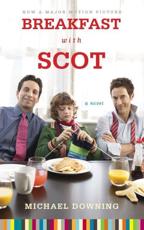
Stepping away from the traditional once-a-month format, beginning January 7th with Breakfast with Scot by Michael Downing, the book club will meet every Wednesday at 6 p.m. at Dunshee House, on the corner of 17th East & East Thomas on Capitol Hill. Rather than the typical single meeting moving quickly over many topics, each novel will be discussed for four consecutive Wednesdays, allowing time to follow particular avenues of interest, explore the portrayal of gender roles, parenting, integrity, and the many other issues pertinent to living a healthy gay life today. People with busy schedules can choose whichever date is most convenient. More socially-available readers may choose to come every Wednesday.

Nick DiMartino, online book reviewer, author of three novels and over twenty plays, will facilitate the meetings. Since 2001, DiMartino has been hosting the book club at University Bookstore, selecting the best new novel of the month. Inspired by the recent visit to Seattle of the Dalai Lama, DiMartino decided to create a vehicle to share with the gay community the greatest joy of his life, resulting in Dunshee House’s new, all-community weekly reading program, the Seattle Gay and Lesbian Book Club. “Reading can be lonely,” said DiMartino. “Sharing opinions and reactions, hearing how others experience the same book, can be an eye-opening experience.” The book club will provide a comfortable, safe place to exchange ideas and share perspectives. Brad Craft, UBS bookseller, will give book club members the social, cultural and historical background in which each novel or memoir was created.

Each month’s book will have four discussions, every Wednesday evening at 6. The first six selections have been announced. Future titles include works by Virginia Woolf, Thomas Mann, Jean Genet, Andre Gide, James Baldwin, Yukio Mishima, Dorothy Allison, Edmund White and Paul Monette.

Friday, January 02, 2009

A (Forthcoming) Story for Younger Readers

In, I think, the second grade, already the consummate ham, I organized a "play" to commemorate Lincoln's Birthday at a PTA meeting. Aided by my pals Jeff (as Lincoln) and Joel (as Booth,) we re-enacted the tragedy of Lincoln's assassination. When Booth jumped from the scene of the crime to the stage, he nearly took the bunting and the Presidential Box -- made of cardboard -- with him. Luckily the dying Lincoln thoughtfully grabbed our falling set and held it throughout the rest of the action. Now why we chose the assassination as our tribute on the man's birthday, I do not now recall. I do remember that I was the narrator and Jeff was cast as Lincoln because, unlike me, he must have already been well over three feet tall.

I am not a big fan of assassination histories. Most tend to be written by conspiracy theorists and like minded paranoids. So when a great book does come along dealing with Lincoln's untimely end, it takes me awhile to warm to it.

Well, there is such a book on Lincoln's assassins, and I'm recommending here, a bit late. James L. Swanson has written the definitive history of the flight of John Wilkes Booth, Manhunt: The 12-Day Chase for Lincoln's Killer. Published in 2006, it is in paperback now. Terribly exciting, and full of information previously unknown to me, Swanson's book managed to tell a familiar story in a remarkably fresh way; taking the flight of Booth as an opportunity to detail both the hunt, and the immediate consequences of the assassination.

Come February, Swanson has a new book coming out, for younger readers: Chasing Lincoln's Killer. The author has recast the whole story in language appropriate for this new audience without losing the excitement and serious scholarship of the adult version. The new book is handsomely designed, includes a number of large illustrations, and will sell in hardcover for only $16.95. A perfect gift for a younger history buff. Much better, no doubt, if less hilarious, than my production from the 2nd grade.

tell all your friends!