Showing posts with label Dan D.. Show all posts

Wednesday, January 12, 2011

Biblio-loneliness

I am far away from Seattle at the moment: Palm Springs, CA to be specific. And while the Pacific Northwest is bracing for snow showers followed by rain, the Coachella Valley's forecast is for clear skies, sun, and daytime highs in the 70s.  And still, I feel a bit homesick.  This has little to do with the great people surrounding me at the moment, and everything to do with the fact that there is no bookstore within easy reach.

I have plenty of reading material, or at least enough to get me through my stay--three volumes of the great Sean O'Faolain's short stories, which include some of my favorite stories ever, "Midsummer Night's Madness" and "The Heat of the Sun."  But there is something about the confines of a bookstore that brings me solace when I am away from home.  Seattle is blessed with a preponderance of bookshops. I could recount hundreds, if not thousands, of times I sought comfort in their walls from some travail of life.  Searching for, if not always finding, a book that would console whatever was troubling me at the moment--the ever thrilling promise of new discovery. And if not something new, then maybe revisiting an old favorite, even if I could find it on my own bookshelf at home.  Somehow, reading such a passage in public, in the open, made it feel more vibrant, more immediate.

My heart leaps whenever I read Virginia Woolf's climactic passage from To The Lighthouse, where James lands the boat, and his father says triumphantly: "Well Done!'" Or, in Persuasion, the letter Captain Wentworth sends Anne, love rarely rendered more passionately:

You pierce my soul. I am half agony, half hope. Tell me not that I am too late, that such precious feelings are gone for ever. I offer myself to you again with a heart even more your own than when you almost broke it, eight years and a half ago. Dare not say that man forgets sooner than woman, that his love has an earlier death. I have loved none but you. Unjust I may have been, weak and  resentful I have been, but never inconstant.

Five years ago, I was in Clermont-Ferrand, France to attend its Festival of short films.  It was cold, snow piled into grey slushy drifts throughout the city, the sidewalks barely passable.  But across from the main film venue was a bookstore.  It didn't matter that nearly every volume in the store was in French (there was a small English language section), I spent most of the time between screenings there, trying to stay warm, and exploring the strange, almost otherworldly, books. I don't speak French, but I got a kick out of picking up a copy of Mark Twain or Don DeLillo, and seeing that it was translated from "Americain."  Not English, American.  Or French translations of H.P. Lovecraft's work, wherein the author bio on back begins, "Reclus, malade, misanthrope et éminemment matérialiste," which translates to "Recluse, invalid, misanthrope, and imminent materialist." Only in France would such a description sell books.

Last year in Palm Springs, there was a small bookshop that specialized in Latino-themed books, t-shirts, and souvenirs, but also had an eclectic, yet very interesting selection of English titles, both new and used.  Isabel Allende shared shelf space with Irvine Welsh ... I mean literally, the same shelf.  James Joyce, Mervyn Peake, and John Grisham were sandwiched in-between.

It has since relocated, to where I don't know.  The only books I've found are at the grocery store next to the magazines, mostly mystery series and romances, neither are quite my cup of tea. In another week, I'll be back in Seattle, where I can just march down the stairs from my desk and be comforted by thousands of books, if I so desire.  But till then, my biblio-loneliness persists.
-Dan, Events

Thursday, December 02, 2010

Capote, Colette, and the Art of Gift Giving


On Tuesday, December 7th, at 7pm, our Used Books Buyer Brad Craft will be reading Truman Capote’s “A Christmas Memory,” at the U-District Store. This will be Brad’s fifth year favoring us with his rendition of Capote’s bittersweet holiday story. If you’ve never attended one of his live readings before, then I whole-heartedly recommend you swing by for this seasonal treat. I will be in attendance, and hope to see many of you there as well.


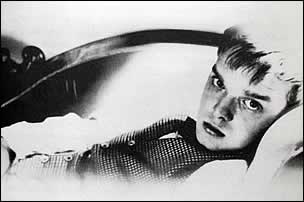
But ever since I began working at University Book Store, it is another of Capote’s pieces that comes to my mind, particularly during the Holiday season when shoppers flood the store in search of gift recommendations. It is his short essay “The White Rose,” wherein Capote recounts his visit with the legendary French author Colette, shortly after the publication of his first novel, Other Voices, Other Rooms. Upon entering Colette’s bedroom, “as my hostess was an elderly partial invalid who rarely left her bed,” the usually brash Capote found himself timorous, tongue-tied, and unable to look directly at Colette. Instead, he found his attention drawn to her collection of antique, crystal paperweights. “There was perhaps a hundred of them covering two tables situated on either side of the bed….” Noticing his interest, she is able to draw him into conversation by explaining her fascination with these “snowflakes,” as she calls them.

She ultimately gives him one, the eponymous white rose, as a present: “By so doing she arranged for a financially ruinous destiny, for from that moment I became a ‘collector’….” Capote then goes on to relate his own passion for these objets d’arts, before ending the essay with the revelation that he originally tried to refuse Colette’s gift. “…[W]hen I protested that I couldn’t accept as a present something she so clearly adored, [she replied] ‘My dear, really there is no point in giving a gift unless one also treasures it oneself.’

Since first reading those words, I have tried to employ this advice whenever possible, and found it to be most rewarding. So, if this Holiday season you wish to go beyond the various lists submitted to you by loved ones, then, once more, I whole-heartedly recommend following Madame Colette’s example. 


--Dan, Events

Friday, August 13, 2010

Of Movie Tie-ins and Novelizations

Earlier this week, while I was perusing the internet over my morning cup of tea, I came across the trailer for the newest adaptation for Gulliver's Travels, starring Jack Black Now, I'm not going to pass judgment on either the trailer or the perspective quality of the film, but the very existence of the project introduced an interesting line of thought into my head.

If you've read my previous post, you'll know my thoughts on how film and books often have a symbiotic relationship. Books inspire movies, which lead the book's devoted readers to see the adaptation; while on the other hand a film-goer who discovers a new favorite will often go back and read the book, whether they are original works or, in the case of some summer blockbusters, novelizations.
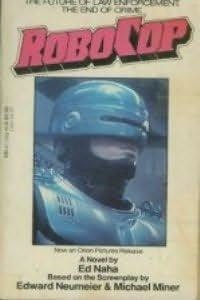
 As a thirteen, fourteen year old boy, I loved film novelizations. If I couldn't get one of my parents to take me to see the latest R-rated movie (and, often, I couldn't), then at the very least I could buy the novelization, no ID required, and read Aliens, Predator, or RoboCop. Later, when I did see these movies, on video tape or cable, I was a little disappointed as the films never quite measured up to my own imaginings.
But regardless of whether a book is the original source material or a novelization, publishers are always quick to release tie-in editions — books bearing covers and/or artwork from the film. It was this little tidbit that made me pause in regards to the newest, cinematic version of Gulliver's Travels. For anyone whose ever read the source material, it is pretty evident that this version is a fairly loose adaptation of the original novel — it would probably be more accurate to say “inspired” rather than “based” or “adapted.” Unless there's a considerable amount of scenes missing from the trailer, the filmmakers have chosen not only to modernize the story, but also to focus on the Gulliver's first, and most famous, voyage to Lilliput, ignoring his adventures in Brobdingnag, Laputa, and the Country of the Houyhnhnms. And yet, come the holiday season, when the film will be released, I'm willing to bet that at least one publisher will release a tie-in version of the novel, complete with movie poster cover. To further complicate matters, the same publisher might release a novelization of the film with similar cover art. I remember this happening when Bram Stoker's Dracula, the Francis Ford Coppola version, was released; I was in a bookstore and on the shelf, right next to each other, was the tie-in edition of the original novel and the film novelization. Both had full color inserts with scenes from the movie and both had cover art based on the movie poster. Regardless, of which version you wanted to read, due diligence needed to be exercised to make sure you purchased the right one.
Now, I regress myself to my 14-year-old self, let's say I'm a huge Jack Black fan who loves such movies as School of Rock, Nacho Libre, Tropic Thunder just to name a few, and I watch these films over & over, bits, if not whole tracts, of my everyday conversation are made up of Jack Black quotes. I'm in a bookstore a week or two before Gulliver's Travels (the movie) opens, and I come across the film novelization. After much cajoling, I convince my parent into buying it, I run back to the section, quickly grab the book with the tethered Jack Black cover, and slip it to my mom or dad just as they're making the afternoon purchases. Once home, I crack open the book, only to discover prose of a decidedly seventeenth-century nature and much Swiftian satire. Oops.

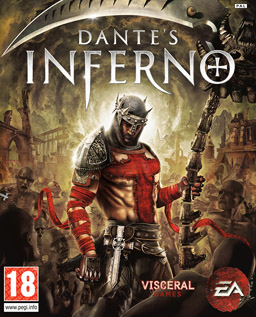
Another example is the video game Dante's Inferno, obviously based on the first canticle of The Divine Comedy. Again, liberties have been taken on the part of the game designers to increase the action quotient: Dante is now a crusader returned home, instead of an exiled poet, who must venture through the nine circles of Hell to reclaim the soul of his beloved Beatrice from the hands of Lucifer. The video game has inspired a direct-to-DVD animate film as well as a tie-in edition of the Henry Wadsworth Longfellow translation of Dante's original text, wrapped in the video game's cover art and includes “sixteen pages of stunning art, [about] how the monsters and characters—from King Minos and Cerberus to Lucifer himself—evolved from their classic images to the darkest creatures in damnation, and witness how the environments fashioned by the game's creators bring the tortured netherworld of absolute evil to hideous life.” The game's chief designer writes an introduction for the edition, in which he asks, “Is Dante rolling over in his grave?”

Bait and switch? I wouldn't argue that. After all, tie-ins and novelizations are often pretty clearly marked, if you're paying attention (something my 14-year-old self wasn't always too good at). And, quite honestly, there's much in Swift's original novel that would tickle a 14-year-old, such as when the scene in which Gulliver extinguishes a fire in the Lilliputian Royal Palace. Though I fear, the more likely case would be the book would be returned to the store and exchanged for the novelization, so my 14-year-old self could read what, in a week or two later, will almost exactly be portrayed on the big screen — although probably not quite as good as I had imagined it. While my contemporary self, the one who has read and loved Swift's brilliant novel, can only be disappointed by a Hollywood dilution. It may very well be enjoyable, but I fear I'll miss the depth and humanism of the original for a few moments of mirthful diversion.

--Dan

Friday, June 18, 2010

Post-SIFF Reading List

This past Sunday, the 36th edition of the Seattle International Film Festival (SIFF) came to a close. Our city’s celebration of all things cinematic provides movie lovers with the chance to engorge themselves on 25 days of films from around the world. A number of SIFF passholders take full advantage of the event by seeing well over 50 films, with a few even breaking the 100 film barrier. However, most patrons see only a carefully selected handful from the genres that most appeal to them—comedies, historical dramas, crime-thrillers. In many ways, selecting a SIFF film for the evening is very similar to selecting your next book: read the description, take a few recommendations, or something about the title just grabs you. And although the world of film and books may seem somewhat removed from each other, there is a vital interdependence between the two. 
Take, for example, The Hedgehog, this year’s Golden Space Needle Award for Best Picture at SIFF (as voted by the audience), based on the bestselling novel The Elegance of the Hedgehog by Muriel Barbery. To hear SIFF Artistic Director Carl Spence’s account of how he serendipitously discovered the film at the 2009 Cannes Film Festival parallels many readers’ personal discovery of the novel after it appeared on American shelves. Of course, without the original novel the film would not exist, but now that the film has enchanted hundreds of SIFF patrons, many of them will now seek out the novel in order to enrich their viewing experience. The reverse is true as well: devotees of the novel will seek out the film version to see how wonderfully the film had been adapted to the screen.

It is this symbiosis between books and films that often draws filmmakers into making adaptations of preexisting literary works. This year, a number of high profile SIFF films had literary origins. The feature-film version of Daniel Woodrell’s Winter’s Bone won the Golden Space Needle Award for Best Actress for Jennifer Lawrence. Local musical artists The Maldives provided accompaniment to the 1925 silent-film version of Zane Grey’s Riders of the Purple Sage, and Stephin Merritt of The Magnetic Fields—along with Daniel Handler, a.k.a. Lemony Snicket—created a whimsical new score for the newly restored 1916 version of Jules Verne’s 20,000 Leagues Under the Sea (which also incorporates a hefty dose of The Mysterious Island).

It’s not just literary works that find themselves being given the cinematic treatment, but also two authors as well. Howl, stars James Franco portraying Allen Ginsberg, the poet laureate of the Beat Generation, while the documentary William S. Burroughs: A Man Within examined the eponymous writer’s fascinating yet troubled life. Both films are certain to renew interest in their respective subject’s work.
Of course, most of the films at SIFF weren’t literary adaptations or writer biopics, but even films made purely to entertain can pique interests in a variety of topics. My own personal favorite SIFF film, Neil Marshall’s Centurion, sent me scouring the history section where I found Legionary: The Roman Soldier’s Manual (Unofficial).

Finally, if SIFF has inspired any of you to broaden your general knowledge of film, I’d recommend starting with 101 Things I Learned in Film School by Neil Landau (who recently made an in-store appearance), which is a primer covering basic terminology, film theory, and movie business insights. Edward Jay Epsteins’s The Hollywood Economist further explores the rather Byzantine, but no less fascinating, economic principles under which Hollywood studios finance, market, and sell their films and stars in search of a profit. And, finally, film critic David Thomson has authored a trio of books that are essential reading for film neophytes—The Whole Equation: A History of Hollywood is a concise history of the film industry and it’s cultural impact on America. Both The New Biographical Dictionary of Film (with a new edition out in October) and Have You Seen…?: A Personal Introduction to 1,000 Films are insightful, at times irreverent, look at the iconic personalities and films, from the past and present, which constitute the cinematic mythos.

--Dan, Events

tell all your friends!