Here's a recommendation from Brad, one of our used book buyers:
"There are some beautiful and inexpensive alternatives to poetry in paperback, for anyone looking to improve a personal library. Our selection of used books continues to grow, with some specially nice local titles recently arrived. And two series from respected publishers deserve special note. The Library of America project continues to produce excellent editions of standard American authors in their American Poets Project. Contemporary poets and scholars edit these books, one volume per poet. Beyond the standard Whitman etc., this series is great for some of it's less likely reissues like Emma Lazarus, John Greenleaf Whittier, and Edith Wharton! The books are handsomely designed by Chip Kidd. At twenty bucks a piece, these are a smart upgrade from one's ancient paperback Penguins.
"Also a favorite, the Everyman's Library Pocket Poets series now has a long list of available titles. All are bound in sturdy little hardcovers with attractive designs, with dustjackets and ribbons. Poets included range from Auden to Wordsworth. My favorites are their themed anthologies, with volumes devoted to poems of the sea, zen, dogs, blues, war, friendship and on and on. At only $12.50 a book, these small treasures lend any shelf a very superior air indeed."
Here is a selection from John Greenleaf Whittier's classic poem "Snow-Bound":
Unwarmed by any sunset light
The gray day darkened into night,
A night made hoary with the swarm
And whirl-dance of the blinding storm,
As zigzag wavering to and fro
Crossed and recrossed the wingéd snow:
And ere the early bed-time came
The white drift piled the window-frame,
And through the glass the clothes-line posts
Looked in like tall and sheeted ghosts
(I'm partial to "Snow-Bound" because one of my favorite Upper Michigan bookstores took its name from the poem.)
And here is something from Doggerel: Poems About Dogs. It's called "My Dog is Named for Elizabeth Bishop," and it's by Robyn Selman:
October. The first pricks of cold air in
the city morning. We walk, Liz and I,
up then down in the same uneven line.
Her ears as sharp as sharpened pencils,
she pulls me along her wayward travels.
She darts out headlong, paces ahead,
coming and going and leaving again,
the way shadows seem to meet the tops of heads,
dissolve and are newly elongated.
We like the early, early morning best.
Our view is, thankfully, how we left it.
Nothing has stirred yet, the news lies unread.
Except for the weather, it's all so still,
and no one is walking out of our world.
Monday, April 09, 2007


Friday, April 06, 2007
National Poetry Month Recommendation: Wislawa Szymborska
Lawrence Weschler (his friends call him Ren) was the writer who introduced me to Wislawa Szymborska with an essay in his book Vermeer in Bosnia. The Polish poet won the Nobel Prize for Literature in 1996 and began her lecture:
"They say the first sentence in any speech is always the hardest. Well, that one's behind me."
How can you not love a person who opens a Nobel Prize lecture with a joke? Seriously?
Read the rest of it if you have a chance. It is self-deprecating, disarming, and fascinating. Others have used the Nobel stage to speak grandly, earnestly, politically. I have no problem with that approach. I just much prefer Szymborska's.
Here's a selection from "Maybe All This," the poem Weschler talks about in Vermeer:
Maybe all this
is happening in some lab?
Under one lamp by day
and billions by night?
Maybe we're experimental generations?
Poured from one vial to the next,
shaken in test tubes,
not scrutinized by eyes alone,
each of us separately
plucked up by tweezers in the end?
Or maybe it's more like this:
No interference?
The changes occur on their own
according to plan?
The graph's needle slowly etches
its predictable zigzags?
And here, the opening stanza to "The Joy of Writing":
Why does this written doe bound through these written woods?
For a drink of written water from a spring
whose surface will xerox her soft muzzle?
Why does she lift her head; does she hear something?
Perched on four slim legs borrowed from the truth,
she pricks her ears beneath my fingertips.
Silence—this word also rustles across the page
and parts the boughs
that have sprouted from the word "woods."
Dog of the Week

Well-behaved, friendly dogs are never turned away from our Ave store. We even have treats behind the Used Books counter.
So I've decided we should feature some of our favorite four-legged regulars with this new feature: Dog of the Week.
And who better to be the very first Dog of the Week than Harris? She's been a University Book Store fixture for as long as I can remember.
Good girl, Harris.
Thursday, April 05, 2007
National Poetry Month Recommendation: Here, Bullet
Anthony Swofford's Jarhead was an amazing book. If you haven't read it, do.
And when you've finished that powerful memoir of a man at war, follow it up with Brian Turner's poet equivalent Here, Bullet.
Turner served in the U.S. Army and spent time in both Bosnia-Herzegovina and Iraq. Before that, he earned an MFA at the University of Oregon. Here, Bullet, a collection of poems about the war in Iraq, won the 2005 Beatrice Hawley Award. Deservedly.
Heck, save the Swofford. Read the Turner first.
Here's a selection from the titular poem:
If a body is what you want,
then here is bone and gristle and flesh.
Here is the clavicle-snapped wish,
the aorta"s opened valves, the leap
thought makes at the synaptic gap.
Here is the adrenaline rush you crave,
that inexorable flight, that insane puncture
into heat and blood...
It's powerful stuff, frank and fearless in its observations. Here's another bit from "In the Leupold Scope":
With a 40X60mm spotting scope
I traverse the Halabjah skyline,
scanning rooftops two thousand meters out
to find a woman in sparkling green, standing
among antennas and satellite dishes,
hanging laundry on an invisible line
The irony of that image is clear, but arresting all the same.
It's a fine book.
Wednesday, April 04, 2007
National Poetry Month Recommendation: Praise for Mr. Cogito
The Collected Poems 1956 - 1998
Zbigniew Herbert (Ecco 2007)
"Wam-Bam. Look out ladies and gentlemen, for it appears that one of the great poets of the twentieth century has landed on our shores, and if I'm not mistaken, it looks to be for good. Though he's had slim and piecemeal exposure over time on this side of the Atlantic, Ecco Press has gone ahead and presented the Polish poet Zbigniew Herbert in a translation that could float a boat and with a girth of work to sink, if not the self-same boat, a boat. What can recommend this poet? Well, if you have ever wondered what the intellectual rigor of the haute Modernists had looked like if those men of ash and dry bone had had the flagrant tenacity to find worth in the physical world, to approach history with the one-two whammy with the afore said intellect followed by an unadulterated visceral dig into emotions and ecstatics, then this is what we would have, in fact do have, in the shape of Mr. Herbert. It's been a while since I have come across a poet with so much fervor and control, acumen and ardor, both political and apolitical, heroic and hermetic; he's like those two opposing forces that hold up bridges, push and pull, tension and suspension. You know the forces that Jung use as an allegory for the archetype of the psyche? That's close to what Herbert has doen. If you've gotten all that can be had (bless your heart) from Eliot, Auden, Pound, Ashbery et. al. (bless their hearts), Mr. Herbert is the new blood in the veins. It's a goodly thick blood, a lasting one."
—Jacob
Thanks, Jacob. Here's a short selection from "Mr Cogito's Abyss":
At home it's always safe
but just over the threshold
when Mr Cogito goes out
on his morning stroll
he meets—the abyss
this is not the abyss of Pascal
this is not the abyss of Dostoevsky
this is an abyss
to Mr Cogito's size
fathomless days
fear-fraught days
And the first few lines from the prose poem "Armchairs":
Who ever thought a warm neck would become an armrest, or legs eager for flight and joy could stiffen into four simple stilts? Armchairs were once noble flower-eating creatures. However, they allowed themselves too easily to be domesticated and today they are the most wretched species of quadrupeds. They have lost all their stubbornness and courage.
Tuesday, April 03, 2007
A Note From Nick
Our friend Nick DiMartino sent us this report from...his easy chair!
Finding the Good Ones
24 March 07
Saturday night
What am I doing in this armchair?
I should be at the bowling benefit for gay marriage equality, and instead I’m caught up in Javier Cercas’ exciting new novel, The Speed of Light (paperback original, $13.95), unable to put down this unexpected, unsettling and perceptive Spanish take on the Vietnam war.
The book is due out next month. It’s about a Spanish grad student who gets an assistant professor post at the University of Illinois at Urbana, where he shares an office with a complex and embittered Vietnam vet. When his office mate disappears—and Rodney Falk is a fascinating guy—the unnamed narrator goes to the little town where Rodney lives with his Dad.
Well, now Part Two involves the Dad summoning the narrator back out to his house to tell him some dreadful tale of Vietnam—I’m expecting the worst. It’s really tense going. We’re about to find out why Rodney Falk is the way he is, and what we’ve already learned has been pretty heartbreaking. But fascinating! Narrated in this cool non-fiction style, utterly believable, blurring ever more the line between memoir and novel.
The only other book by Cercas in English translation is Soldiers of Salamis ($14.95), a similarly hyper-realistic recreation of a moment in wartime. In this case, it’s this classic unforgettable moment that the reader comes back to in the novel again and again: a fascist bad guy manages to escape from a mass execution at the end of the Spanish Civil War. A pursuing soldier finds him, locks eyes with him, holds him at gunpoint, and lets him live.
Out of this incident Cercas creates a fascinating fictional research project to make history surrender its secrets. Part One shows the author’s discovery of the incident and his research, with a little help from his girlfriend. Part Two is the biography of the fascist who walked away from the firing squad alive. Part Three is the author’s attempt to find the soldier who spared his life, in a search through all the nursing homes of France. It all turns into a subtle, smart meditation on war, memory, and fiction writing.
I haven’t finished Speed of Light, but I will never forget the ending of Soldiers of Salamis. Cercas is tough and unsentimental and a pleasure to read. It’s like no novel you’ve ever read before, and boy, does it have a cumulative effect at the end.
So it’s a hard act to follow, and this second book is every bit as good. And even more disturbing, because we’re not talking about the Spanish Civil War here, we’re talking about us, the American debacle seen by a non-American, a war in which almost sixty thousand soldiers died, most of them boys of twenty, and ten times more bombs were dropped than on all of Europe during the Second World War.
Enough blogging for one night—I want to get back to my book. Even though I'm nervous. I’m about to read about Rodney Falk’s encounter with Captain Vinh...
Happy National Poetry Month!
I almost forgot to wish you all a fine and festive National Poetry Month.
Hope it's gone well so far. Stop by The Shelf Life every couple of days for new poetry recommendations, as I have put out a call to the constant readers and expert booksellers here at University Book Store to ask about their favorite books of verse.
I'll get the ball rolling with the newest book by Dean Young Embryoyo. Here's a short selection from the poem "Clam Ode":
One attempts to be significant on a grand scale
in the knockdown battle of life
but settles.
It is clammy today, meaning wet and gray,
not having a hard, calciniferous shell.
I love the expression "happy as a clam,"
how it imparts bouyant emotion
to a rather, when you get down to it,
nonexpressive creature...
Young and his friend and fellow poet, Tony Hoagland (author of the fantastic What Narcissism Means to Me can be found chatting here.
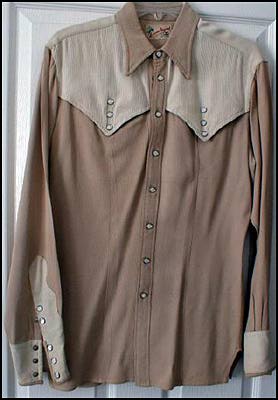
Young is an impressive poet—bright and lively, very funny, mischevious—and he wears his cowboy shirts tucked in.
Monday, April 02, 2007
I'd rather be reading...

Here's an interesting coincidence. This weekend I was going through on of my favorite Best American Short Stories collections—the one Richard Ford edited 1990—and I read a story I hadn't read before. It's called "The Reverse Bug" and it's by Lore Segal. It was recommended by another writer who I like very much.
When I finished Segal's story I thought, "Not bad. Wonder if she has a collection?" I did a quick, poor internet search, and didn't see anything on this bio. So I didn't search further.
This morning I was walking by the new hardcover fiction display when I saw Shakespeare's Kitchen—a new interconnected short story collection by Lore Segal that includes "The Reverse Bug"!
Pretty weird, huh? My hypothesis: I have somehow acquired the power to turn my desires into reality! I am now concentrating on getting a literary agent and winning the lottery. Wish me luck.
Needless to say, if I wasn't shelving, I'd be reading Lore Segal's new book.
Subscribe to:
Posts (Atom)


 Posts