Tuesday, March 19, 2013

Phases of the Moon


Okay, so I finally bought myself a copy of Madness, Rack and Honey, the collected lectures of Mary Ruefle out from Wave Books. Full disclosure: I haven't finished it yet. I'm not adding my voice to the wide praise and acclaim it has received from all over, including the NYT Book Review, and the Kenyon Review. Ruefle is a gift. For now, I just want to talk about the second essay in the collection, a lecture she gave on poetry and the moon.

Let's start with my own story about poems and stones--- "The moon is a stone that floats," writes Mark Strand in a chapbook titled Chicken, shadow, moon & more. I want to say that I once stumbled upon the book, that it's readily available, but, in fact, it's a tough find. I requested it through interlibrary loan for my undergrad senior thesis. If you ever chance upon it, or have time to bug your favorite librarian, I strongly urge you to get it. (And gift it to me!) So this book, like a philosophical Dr. Seuss, says, "The moon is a stone that floats." 

I'm floored by this. In Charles Simic's notebooks---all the bizarre bits of childhood and dirty bits of politics that you'd imagine in the poet's head---he wrote nearly same thing, but he wrote, "The poem I want to write is impossible. A stone that floats." (Seriously, you should read his notebooks)(and his poems! this great collected works released this month!). It's not a secret that Simic and Strand are friends, and probably shared this image over a beer; or, the romantic in me hopes it was pen and ink letter, but I got hooked. I keep reading all these essays on poets and the moon and the surrealists and the moon, and Sappho and the moon and I'm just not satisfied. From Luna, lunatics: literally, touched by the moon. 


To circle back: Madness, Rack and Honey is a brilliant champion of the relevance, necessity and place of poetry. Ruefle's chapter on poets and the moon just smacks me over the head (in the best way) with fresh insights about modernity and poetry. After so many reductive critics, claiming that the moon is a simple archetype, a preloaded image, evocative of everything and nothing, Ruefle gives a gracious handling of the subject, ranging from personal anecdote (the foreign cab she was in when astronauts walked on the moon, the unintelligible reports on the radio) to the obvious and necessary research (the front page features after the Lunar Landing, astronaut testimonies).

And now maybe I can shut the book on poetics of the moon.

_Sarina, Bookseller

Monday, March 11, 2013

Ladies of Literature

This month saw the publication of the 2012 VIDA Count, a study of gender representation in literary journals. VIDA's results are, sadly, not that surprising. Male reviewers and male authors hold the staggering majority of feature articles. The VIDA Count surveyed a broad selection of journals, including the New York Times Book Review, the Boston Review, Granta, Harper's, POETRY, The New York Review of Books, Times Literary Supplement, The Paris Review, The Atlantic, New Republic, The Nation, etc...

The study is revealed in conjunction with National Women's History Month, which began the first day of March. Even more buzz has been generated by the events of the AWP Conference in Boston, including a discussion moderated by VIDA Board Member Cheryl Strayed. (Yes, the Cheryl Strayed of Wild!) And there are some awesome conversations emerging from the most recent numbers, including this conversation with Tin House editor Rob Spillman. While the voices of women have come a long way, we certainly have a lot of room to grow, as a culture, towards equality in publishing. But these surveys and talks allow us to reassess our growth, and adjust accordingly.

_Sarina
Bookseller


Thursday, March 07, 2013

Getting Lost


I just finished reading Rebecca Solnit's A Field Guide to Getting Lost. The book is one-half personal essays that range in topic from relationships to desert walks, from dream narratives about tortoises and the childhood home to the memory of seeing San Francisco from a distance and a height. Solnit parses tales about her ancestors at Ellis Island with observations about light treatments in old photographs. 
 
It is a beautiful answer to the pressures upon a memoirist: remaining true to experience, relaying something of more than personal import, treating landscape and individuals as precious cargo. The other half is completely fractured, in the best way. Solnit wears a patchwork hat of the cultural historian, art critic, spiritually-bent philosopher, historian of maps and cartography, travel writer and vagabond.
 
It's a book about getting lost. It's a book about landscapes---physical, cultural and emotional. Solnit shows so many ways to get positively lost in these landscapes. In our art, in our minds. This book is layered like blankets upon a bed that you just don't want to step out of.
"Airplane flights are usually from city to city, but in between are the untrodden realms to which you can only give approximate labels----somewhere in Newfoundland, somewhere in Nebraska or the Dakotas. From miles up in the sky, the land looks like a map of itself, but without any of the points of reference that make maps make sense. The oxbows and mesas out the window are anonymous, unfathomable, a map without words. I've found out that the wish the plane would do an emergency landing in one of them is widespread among those who go from city to city on their work. Those nameless places awaken a desire to be lost, to be far away, a desire for the melancholy wonder that is the blue of distance." --- excerpted from A Field Guide to Getting Lost, by Rebecca Solnit

Thursday, February 28, 2013

On Books and other Stuff

I moved this week. According to Google Maps, I moved a total of 1.5 miles from my old apartment to my new one. I found that it's not merely the displacement that makes a move overwhelming, it's also the energy that goes into cataloging our various stuff, and then attributing value to them. It's enough to make you swear off materialism and make big plans to own less, and keep less. It feeds an anxiety about wastefulness and mental clutter.

However, like most book lovers, my home library is a point of pride and just about the only home decor I bother with. I have acquired a small wooden bookshelf which I refuse to part with, and the books I own are as much curiosities and trinkets as they are pulp and ink.

+

Junk. I wake up every morning to an alarm on my phone. I proceed to refresh my inbox, and immediately receive and delete about twelve messages from various organizations and companies. I get my Poem-a-Day, read my daily Shelf Awareness and, if I'm lucky, read a longer letter from a friend or a colleague. Before I leave my bed, I've discarded over a dozen messages---a dozen thoughtfully crafted, but faceless letters.

But it takes me hours of rationalizing and a week of material bargaining to attribute worth to my books. I sit with them, remembering the characters, or re-reading the review quotes. Telling myself that I know some of it will stay with me. Telling myself that I might leave this book forever and be okay with it. Telling myself I might never even open this book. I might never read it. I feel I ought to, which is why I bought it, but really, when will I read Goethe's Faust if I haven't yet?

+

As hard as it is to wrap the harshness of the word "product" around the sweet reality of a book, I do acknowledge that they are products. That I purchased (mostly). That I believe are a reflection upon myself, my personality. Even the books I haven't read. But I own. Why do books feel so unlike items?

The books we have read are a part of us.

The books waiting on our shelves offer us a glimpse of one or several potential selves that we can become.  Much like having a carrot and a cheeseburger in your refrigerator. We open the door and see two options for fuel.


_Sarina,
Bookseller

Thursday, February 14, 2013

A Few of My Favorite Things

We all play favorites. My favorite pizza in Seattle is definitely Big Mario's on Capitol Hill. My favorite coffee shop? The lovely Cafe Allegro up the alley from our U-District store. My favorite color is the dark, darkest purple before you lose the hue altogether to black.

But when I'm asked to select my favorite book... I start tripping over the seeming significance of favorites. I'll say 'Well, what kind of book? Favorite book of poems? Favorite novel?' and even then, I'll say, 'Favorite book of poems that I've read recently? Or are you talking All-Time Favorite?'

An All-Time Favorite is basically a Personal Classic. And conferring that small award is not a conscious decision. We don't finish a great book, switch on some epic orchestral theme and ceremoniously apply a seal or ribbon to it. Our Personal Classics earn that title slowly, in the back of our minds.

One day your friend will be telling you about his relationship problems, and you'll realize how much he is like the character of a book you read a few years ago. You give him advice based on that character. Or a different friend invites you out for drinks, but you tell her you are exhausted, then stay up until 3am reading. Those are your All-Time Favorite books.


Here are a few of mine: The Sea and the Bells by Pablo Neruda, transl. by William O'Daly, a gorgeous bilingual edition; The Unbearable Lightness of Being by Milan Kundera; Man and Camel by Mark Strand; and The Magician's Nephew by C.S. Lewis, because I could re-read the passage about the Woods Between the Worlds every single day and never find it less wonderful.

_Sarina

**Share your favorite book with us in the comments!**

Wednesday, January 30, 2013

In a recent blog post for the New York Times' Opinionator, Timothy Egan suggests that the Pacific Northwest gloom and rain is directly linked to its active creative life. Egan argues that our literary community thrives in minimal daylight. That Seattle authors are an odd type of plant.

And what does the rain do for us as readers? I'll confess that the weather has a tendency to inspire my Netflix queue... but I have been reading a lot, too! My winter has been marked by an appreciation for the lyric essay. Some of the best things I've read lately:


The Reenactments by Nick Flynn
Essays written by the poet/memoirist whose earlier work, Another Bullsh*t Night in Suck City, was turned into a film starring Robert DeNiro. Flynn writes about the strangeness of watching his life turn into film, and blends anecdote with aesthetic musings on replication, detail and "life-like"-ness.


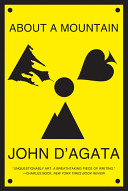
About a Mountain by John D'Agata
This particular book emerged from a controversial essay, whose "truthiness" spawned a vigorous debate between author and fact-checker (that debate is now a book, The Lifespan of a Fact). Regardless, About a Mountain is a wonderfully-constructed book about the city of Las Vegas, a young man's suicide there, and the mislaid plans for nuclear waste storage outside of it.


Bluets by Maggie Nelson
Nelson considers this book a work of poetry, and it certainly is. However, this small book built of short, numbered "propositions" leans on the blurred line of the lyric essay. Simply put, this is a meditation on the color blue. In reality, it is a book on loss, inquiry and desire.


._Sarina, Bookseller

Thursday, December 20, 2012


It comes to me that I must say 'adieu' from my blogging days at University Book Store. I have had some great times here, and have been allowed to put my opinions to print which has been one of the more rewarding aspects of my employment. Thanks for taking me in to your homes and making me one of your booksellers.

Over the past four years I have read more than 150 books, most of which I liked, some of which I loved. So, I take this final opportunity to give you my top 10 picks for books (from those books read in the past four years.) Is that even possible? Well, I will do what I can.

Top books should come to mind effortlessly ... and they should be books that you can easily see yourself reading over and over again, hence an actual physical copy is called for, demanded in fact.

The list that follows is not in any order of top to bottom.


1. Sunshine, by Robin McKinley
my all-time favorite vampire novel! ... wish there was a sequel or sequels, but the author hasn't conceded ... not yet ... I do understand about not wanting to be pigeon-holed.


2. The Road, by Cormac McCarthy
poetic, prophetic (?), dark and dire ...


3. Hundred Thousand Kingdoms, by N.K. Jemisin ... a new voice in scifi/fantasy who is already rockin' the house ... I will be reading more of her books ... she seems ready and poised to be a major literary contender.


4. The Reapers are the Angels or is it the Angels are the Reapers, by Alden Bell. I always get confused on this title, not because I don't love it, rather because I am thinking too darned much. I love-love-loved the heroine in this somewhat short in length award winner. It spans readership from young adult to adult, with the Alex award.


5. Bad Monkeys, by Matt Ruff, a local author. Don't know why it took me soooooooo long to stumble upon this great-funtastic-read?! I won't spoil this for you in any way ... hence end of spiel, except to say that you will be glad to be on the side of those who have read this splendidly unique tale.

6. The Unit, by Ninni Holmqvist, translation by Marlaine Delargy. Set in a future where society mandates that those without biological families submit themselves for random medical testing and requisite organ donation. I would be housed here--in the Unit--if this future existed ... to my eventual sad end. Great characters and believable futuristic setting.


7. Engines of the Broken World*, by Jason Vanhee ... keep on the alert for a-n-y-t-h-i-n-g by this to-date self-published author! A fresh voice in speculative fiction and a dynamite co-worker to boot. May $ucce$$ follow you wherever you go Jason!!! Buy this book!


8. Brief History of the Dead, by Kevin Brockmeier. I loved the cover art on this book of the empty overcoat ... & I am a sucker for good cover art. What happens to us when life ends? This book takes us to the precipice and beyond.

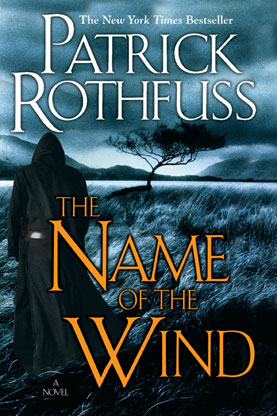
9. The Name of the Wind, by Patrick Rothfuss. Who cannot love this book?!! The author, Patrick Rothfuss, has been to University Book Store on three occasions that I know of and each time he brings such a lovely, welcoming energy to his fans and loyal readers. Thank you Mr. Rothfuss! We love you Patrick! And now all you have to do is to complete your trilogy ... that's all. lol.

And, drum roll, number ten!


10. Baking with Julia, by Julia Child. I bought this as a remainder at University Book Store, so it sold for under $20**!!! Remainders or bargain books are a large stock in trade at UBS, and the lovely Miss Nicole can be found on the floor sorting through a plethora of great titles. Come and browse and see what bargains abound!

So, that's it ... were there any surprises? Are you going to buy with the intention to read, any of these titles? I hope so. And I hope you swing by to say goodbye to me. Waaah!

"Read a book, it's a game changer!"
~Jan O., Book seller for four years at University Book Store.


*For purchase information on this book, call University Book Store and ask for the used book sellers desk.

**To see if there are any remainders of this book available, you will need to call UBS and ask for the book information desk.

Wednesday, December 19, 2012

'Tis the season...

This first pick is especially important to me as we consider "shopping local" during the holidays and throughout the year. Independent bookstores appreciate your business, and so do small presses. Bender is out from Washington's own Copper Canyon Press, a nonprofit publisher with offices in Port Townsend and Seattle. Small presses work hard to put out quality literature, so keep an eye out for their books!


“...Toothpicked samples
at the farmer's market, every melon,
plum, I come undone, undone.”

Unusual, dense, funny and brilliant—these poems are full of surprises. Try one. There is beauty on every page.---Sarina


Lost at Sea by Jon Ronson
 
Fascinating essays by a quirky Brit on subjects ranging from the oddball guy next door to Stanley Kubrick, from credit card debt to the search for extraterrestrial intelligence. Offbeat and entertaining.---Judith


 Seraphina by Rachel Hartman

Seraphina is about a young woman caught between two worlds, hiding her true identity and suppressing her amazing talent for music. Delve into this world of court intrigue, family secrets and civil unrest. Seraphina shines!---Morgaine

tell all your friends!